

Prevent Ice Dams
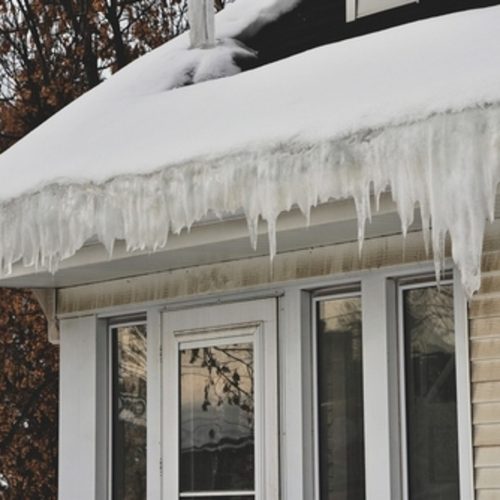
Homeowners in snowy, cold-winter climates are likely familiar with ice dams or masses of ice that gather along the lower edge of a roofline where it overhangs the edge of the home. Left alone, ice dams can cause considerable home damage.
What is an ice dam?
An ice dam refers to a ridge of ice formed along the edge of a roof, obstructing the drainage of melting snow. This backed-up water can seep into the home, resulting in damage to walls, ceilings, insulation, and various other areas.
How do ice dams form?
Ice dams and icicles develop when melted snow flows down the roof and freezes near the edge. This happens when a section of the roof warms above 32 degrees F, causing snow to melt, while the roof’s edge remains below freezing. This situation commonly arises due to a warm attic.
In many homes, heat escapes through ceilings into the attic, warming the wood and shingles directly above it. Despite outdoor temperatures being below freezing, this warmth causes snow to melt over the heated section of the roof. As the meltwater flows down the roof, it encounters the cold edge that remains unwarmed by the attic, leading to the formation of ice dams.
With no alternative path, the trapped water begins to work its way back up under the shingles. Over time, this process leads to leaks in the roof, allowing water to seep into the soffits, walls, and ceilings. Initially, you might observe rust spots on drywall fasteners, which are indicative of ice dams. Additionally, signs such as peeling paint, sagging sheetrock, or stains around windows and doors may become evident. In severe cases, ice dams can even contribute to mold growth or wood rot.
How to prevent ice dams?
Improve Ventilation
Houses equipped with effective attic and roof ventilation typically avoid the issue of ice dams. By promoting the circulation of cool outside air within the attic space, particularly in the soffit or rafter spaces just beneath the roof deck, the roof surface remains below freezing, preventing snow from melting. While this approach may seem counterintuitive, as warm roofs are generally preferred for homes, it actually helps prevent the formation of ice dams. Considering roof venting systems as a means to keep your roof cool during winter is therefore advisable.
Add Insulation
An alternative approach to prevent heat from reaching the roof deck is to insulate the ceiling in living areas beneath the attic or against the interior surface of the roof. For open attics, this entails insulating the attic floor, while for finished second stories with a ceiling directly against the roof, insulating the rafter spaces is necessary (along with using ventilation baffles). Equally crucial is sealing air channels originating from the living space below the attic. It’s essential to seal gaps around plumbing pipes and chimneys, as they can serve as significant sources of heat transfer into the attic from the lower spaces.
Install Heat Cables
If other methods prove impractical and you encounter an ice dam issue, consider installing an electric heat cable along the roofline and gutters. While heat cable may not enhance the aesthetic appeal of the roof, it effectively prevents ice dams when installed correctly.
When arranged in a zig-zag pattern along the roof’s edge, the heating cable prevents melting water from cooling sufficiently to freeze upon reaching the eaves. As a result, instead of freezing, the meltwater is able to flow safely to the ground.
How to get rid of ice dams fast?
Remove Snow From Your Roof Surface
Use a long-handled roof rake with gentle pressure to avoid damaging the shingles. It’s crucial to note that a roof rake is the safest method for snow removal from a roof. Avoid climbing onto the roof during winter to remove snow.
Use calcium chloride or an ice-melt product
A product such as calcium chloride can rapidly dissolve existing ice and prevent the formation of new layers. However, it’s important to thoroughly review the manufacturer’s instructions before proceeding with this method to ensure safe and proper usage.
Chip Off The Ice
Rather than attempting to climb onto the roof, employ an extension ladder positioned at the eaves level to manually chisel away some of the ice. The goal is not to remove the entire ice dam but to create a channel through which meltwater can flow off the roof. Keep in mind that this method may need to be repeated frequently, as the ice is likely to refreeze and form dams again.
Call a Professional
Hiring either a roofing contractor or an ice dam removal specialist ensures a more dependable job and provides comprehensive solutions to prepare your home for future winters. Moreover, they possess the necessary resources and safety equipment to mitigate any potential hazards associated with the removal of frozen snow chunks.
To safeguard against water damage, it's essential to implement effective measures for preventing ice dams on the roof.
If you are looking for contractors for your upcoming home renovation project at New America Construction we provide roofing estimates for all NJ homeowners.
Call us for more information 973-804-9400
Find us in: