

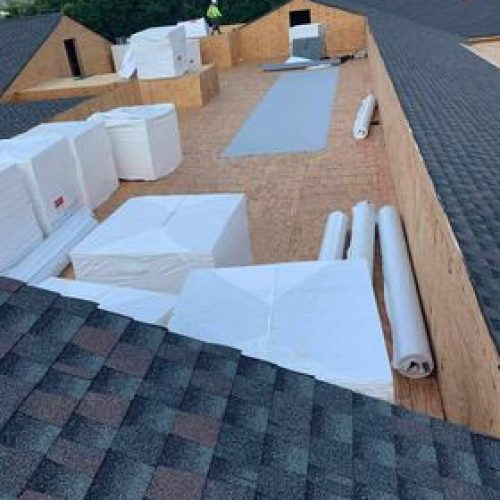
Roofing Underlayment
Roofing underlayment provides an additional layer of defense for your roof. It protects against shingle tear-away in high winds, prevents damage from ice dams in cold weather, and shields the roof during installation before shingle attachment. The roof underlayment plays a crucial role in protecting the roof system by providing an additional layer of defense beneath the roofing materials.
Many property owners perceive their roofs as simply shingles on residential properties or membranes on commercial roofs. However, roofs consist of multiple layers, with the underlayment being one of the most vital. This layer serves a crucial role in safeguarding buildings from the elements.
WHAT IS ROOF UNDERLAYMENT?
The roofing underlayment is situated between the roof deck and the shingles or other roofing material forming the top layer of the roof. Positioned directly on the roof deck, it serves as a secondary moisture barrier, shielding your building from rain, snow, and wind.
Underlayment serves as a crucial shield for the decking and underlying layers of the roof to avert leaks, mold, and water damage from infiltrating the interior of your home or business. As these components are typically made from timber and processed wood products, they are susceptible to rot, mold growth, and various types of damage resulting from trapped moisture. Moreover, underlayment aids in preserving the condition of the decking. Its reusability for secondary installations can also contribute to reducing the cost of your next roofing replacement.
TYPES OF ROOF UNDERLAYMENT
Asphalt-Saturated Felt
Until approximately 15 years ago, asphalt-saturated felt was the preferred roofing underlayment option, but synthetic products have since gained popularity. Also referred to as “tar paper” or “felt paper,” asphalt-saturated felt is composed of varying blends of bitumen (asphalt), polyester, and natural plant fibers (cellulose). It features a flexible base layer saturated with asphalt for water resistance.
Felt paper is commonly secured with staples or attached to the deck using plastic caps. While it offers water resistance, asphalt-saturated felt is not entirely waterproof. It is suitable for steeply sloped roofs where water drainage is possible but not for flat surfaces where water infiltration can occur, potentially causing damage.
Synthetic Underlayment
Many professional roofers favor non-bitumen synthetic or entirely synthetic underlayment. This type of roofing underlayment features a synthetic basemat saturated in asphalt, with fiberglass added to enhance stability and tear resistance.
High-quality synthetic underlayment may include scrim or coarse woven material reinforcement, providing additional slip resistance, even when wet. Non-bitumen synthetic underlayment is renowned for its flexibility, waterproofing, durability, and resistance to mold. Compared to rubberized asphalt, synthetic underlayment is notably lightweight, UV-resistant, fungus-resistant, and long-lasting.
Rubberized Asphalt Underlayment
Rubberized asphalt underlayment is among the priciest types available, offering superior protection. Its elevated rubber and asphalt polymer content render it waterproof. Typically, this underlayment features a specialized backing with a removable protective membrane, facilitating installation. The adhesive backing ensures a tight seal between the clean roof deck and the underlayment.
It’s advisable to use rubberized asphalt underlayment at the roof’s eaves to safeguard the deck edges from water damage. Additionally, experts suggest applying it in low areas like valleys and protrusions, where leaks are more probable.
Ideal for regions with extreme temperatures, rubberized roofing underlayment boasts self-adhesive properties, waterproofing, UV resistance, and flexibility.
THE BENEFITS OF A ROOFING UNDERLAYMENT
Moisture Protection
The primary role of roof underlayment is to serve as a moisture barrier. Despite the proper installation of roofing materials, there’s always a risk of water penetration through small gaps or where materials meet roof protrusions like chimneys or vents. Underlayment offers an additional protective layer, thwarting water from infiltrating your home’s interior and damaging the roof deck or underlying structures. Especially crucial in areas with heavy rainfall or high humidity, robust underlayment ensures any water reaching the roof’s surface is efficiently diverted away from vulnerable spots, maintaining your home’s dryness and security.
Weather Protection
Your shingles serve as the primary defense, engineered to endure wind, reflect UV rays, and block water infiltration. However, due to their overlapping nature, they can be lifted by strong winds, leaving them susceptible to blow-off and water penetration. If severe weather dislodges your shingles, you can rely on your underlayment to prevent snow, ice, and rain from infiltrating the roof deck and reaching your home’s interior. The underlayment offers essential protection until the shingles are repaired or replaced.
Protection from Ice and Water Damage
Ice or snow dams pose a risk to your roof. When snow or ice melts on your roof, the resulting water can seep through any gaps in the ceiling, leading to leaks, water damage, and mold growth. The water-resistant underlayment acts as a seal around the frame, facilitating proper drainage of water from the roof.
Fire Safety
Shingles alone are unable to achieve a Class A fire rating. However, employing roofing underlayment that adheres to industry-standard compliances, is compatible with the shingles above, and meets building codes can assist in achieving a Class A fire rating for your roof.
Underlay, a barrier material typically installed directly onto the wooden boards of your roof, acts as a waterproof layer offering extra protection for your roof. It is designed to offer a secondary layer of protection from moisture intrusion should any water penetrate the roofing material. Underlayments play a crucial role in roofing systems, providing an additional defense against water damage within the roof system.
If you are looking for contractors for your upcoming home renovation projects at New America Construction we provide roofing estimates for all NJ homeowner.
Call us for more information 973-804-9400
Find us in: